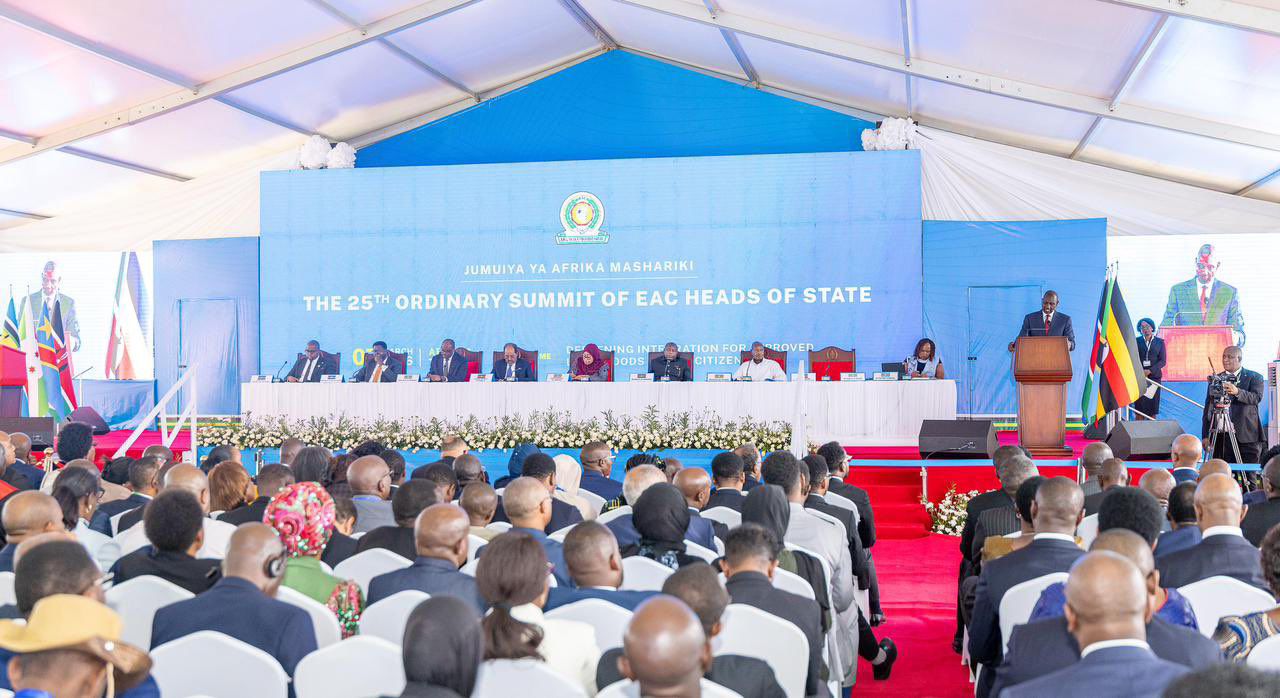
East African Community leaders have drawn a line in the sand: by 30 June 2026, all remaining non-tariff barriers (NTBs) hindering regional trade must go.
The directive, issued during the bloc’s heads of state summit in March, comes as small and medium traders across borders continue to bear the brunt of bureaucratic delays, restrictive licensing requirements, and retaliatory tariffs that quietly push up the cost of doing business.
The numbers behind the urgency are striking. Intra-EAC trade rose by 15% in 2024, hitting a record $11 billion — proof the regional market is working. Yet Kenyan manufacturers report that the cost of doing business across borders has climbed by an estimated 12% due to “invisible” barriers that don’t appear in any tariff schedule but show up in long queues, paperwork, and inconsistent enforcement.
For border communities — traders in Busia, Namanga, Holili, Mutukula, and Gatuna — the impact is daily and personal. A delayed truck means perishable produce lost. A new licensing requirement means a small business owner shut out of a market they served for years.
The reform push is also tied to a deeper issue: the EAC’s own funding crisis. Compliance with member-state contributions slipped to 36.6% in the 2025–2026 cycle, leaving outstanding obligations of roughly $90 million. Leaders have signalled that the bloc is now ready to sanction or sideline non-paying countries — a sign of how seriously regional integration is being taken.
Whether the June deadline holds will be a test of political will. For the millions of East Africans whose livelihoods depend on goods, services, and people moving freely across borders, the deadline cannot come soon enough.