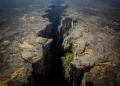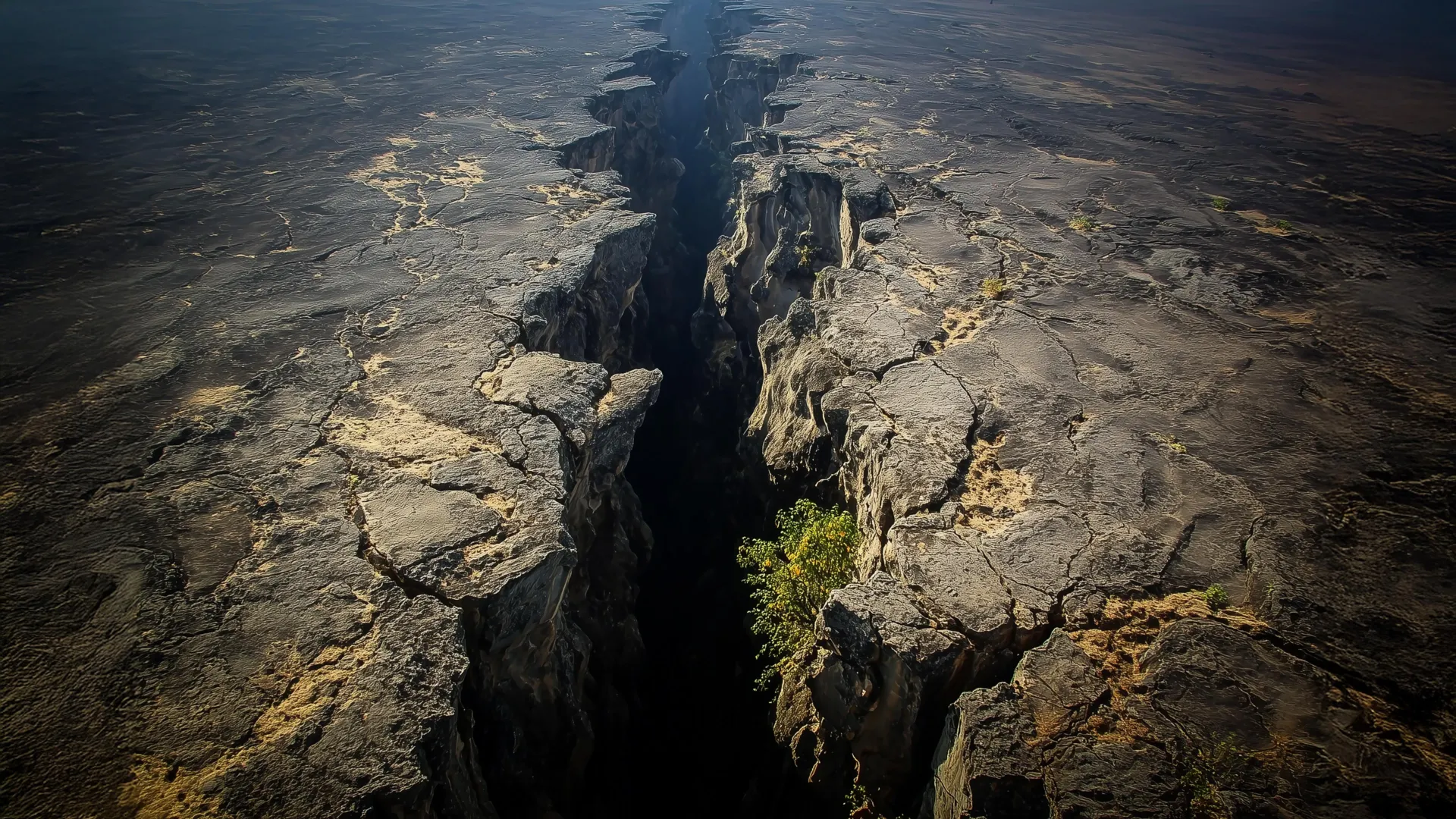
In a finding that reads more like science fiction than science, researchers have confirmed that East Africa is — slowly, geologically — splitting apart. And Kenya’s Turkana Rift is leading the way.
A new study published this month from researchers at Columbia University’s Lamont-Doherty Earth Observatory shows that Earth’s crust beneath the Turkana Rift has been significantly thinned, indicating that the region is further along in continental rifting than previously thought.
The Turkana Rift is part of the larger East African Rift System, which runs from the Afar Depression in northeastern Ethiopia to Mozambique in the south. At Turkana, the African and Somali tectonic plates are drifting apart at a rate of about 4.7 millimetres per year — slow on a human scale, but enough that, over millions of years, a new ocean basin could form.
What makes Turkana exceptional is that it appears to be the first identified active continental rift undergoing “necking” — a critical phase before a new ocean basin forms. “We found that rifting in this zone is more advanced, and the crust is thinner, than anyone had recognised,” said lead author Christian Rowan.
The findings have implications well beyond geology. Turkana is also one of the world’s richest fossil sites, the source of many of humanity’s earliest known ancestors. The same tectonic forces that are pulling the continent apart may have created the ideal conditions for fossil preservation — meaning Turkana’s record of human evolution reflects geology as much as biology.
For Kenya, the research adds a layer of scientific significance to a region already known for its archaeological and tourism value. It also raises new questions about long-term seismic and volcanic risks — and the role East African geology will continue to play in shaping climate, ecosystems, and life on the continent.