• About
  • Advertise
  • Privacy & Policy
  • Contact
No Result
View All Result
Where East Africa's Change Gets Seen
  • Community
  • NGO’s
  • Health
  • Education
  • Environment
  • Changemaker
  • Community
  • NGO’s
  • Health
  • Education
  • Environment
  • Changemaker
No Result
View All Result
Where East Africa's Change Gets Seen
No Result
View All Result
Home Climate & Environment

Drought Displaces 62,000 Somalis in Four Months as Climate Shocks Intensify

Davy Muhoza by Davy Muhoza
April 29, 2026
in Climate & Environment
0
Drought Displaces 62,000 Somalis in Four Months as Climate Shocks Intensify
0
SHARES
0
VIEWS
Share on FacebookShare on Twitter

Nearly 62,000 people have been displaced by drought across five districts in Somalia since the start of 2026, according to the International Organization for Migration (IOM) — and the situation is set to worsen.
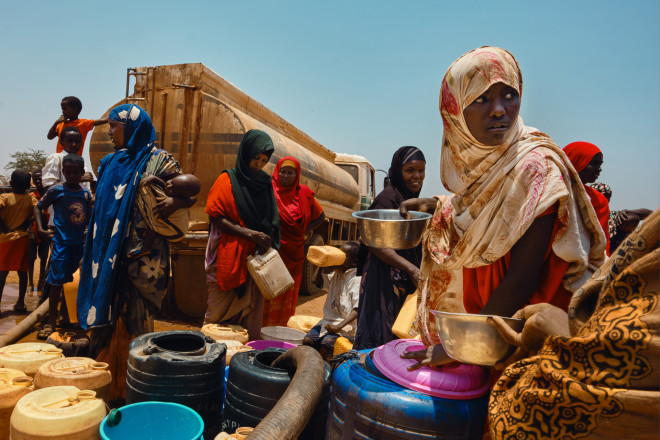
Data from IOM’s Displacement Tracking Matrix shows that drought now accounts for three out of every four new displacements in Somalia, a 22% increase from the same period last year. The trend underscores how climate shocks have moved from periodic emergency to sustained driver of forced migration.

Even if the Gu rainy season (April–June) brings normal to above-normal rainfall, IOM projects that nearly 125,000 more people could be displaced by drought in the second quarter of 2026 alone.

“Drought is already forcing tens of thousands of people from their homes, and many more could be displaced in the months ahead,” said Manuel Pereira, IOM’s Chief of Mission for Somalia.

The visible markers of the crisis tell a stark story. The Gerbooda waterfall in Baidoa, Southwest State, has been reduced by drought to a muddy pool now shared by people and livestock — an image that has come to symbolise how climate change is eroding the ecological foundations of life across the Horn.

The Somalia situation sits within a wider regional emergency. Drought has continued to grip East Africa at the start of 2026, pushing nearly 26 million people into extreme hunger across Kenya, Somalia, and Ethiopia, according to a recent Oxfam report.

Climate experts are increasingly framing the response not as crisis management but as a new normal that demands transformational adaptation: anticipatory water systems, drought-resilient agriculture, mobile pastoralist support, and locally grounded migration policy. The era of waiting for the “old normal” to return is over.


Tags: Climate DisplacementDroughtHorn of AfricaIOMSomalia
Previous Post

Ethiopia Plants 48 Billion Seedlings, Stakes Claim as Africa’s Climate Leader

Next Post

Kenya’s Turkana Rift Is Splitting Africa Apart — and Rewriting Human History

Davy Muhoza

Davy Muhoza

Next Post
Kenya’s Turkana Rift Is Splitting Africa Apart — and Rewriting Human History

Kenya's Turkana Rift Is Splitting Africa Apart — and Rewriting Human History

Leave a Reply Cancel reply

Your email address will not be published. Required fields are marked *

Stay Connected test

  • 24k Followers
  • 99 Subscribers
  • Trending
  • Comments
  • Latest
Burundi Joins the Continental Instant Payments Club with BurundiPay Launch

Burundi Joins the Continental Instant Payments Club with BurundiPay Launch

April 29, 2026
EAC Sets June Deadline to Tear Down Trade Barriers Choking Cross-Border Communities

EAC Sets June Deadline to Tear Down Trade Barriers Choking Cross-Border Communities

April 28, 2026
Faster, Cheaper Cross-Border Payments on the Horizon for East Africa

Faster, Cheaper Cross-Border Payments on the Horizon for East Africa

April 28, 2026
EAC Funding Crisis Hits Civil Society Programmes as Member States Default

EAC Funding Crisis Hits Civil Society Programmes as Member States Default

April 28, 2026
EAC Sets June Deadline to Tear Down Trade Barriers Choking Cross-Border Communities

EAC Sets June Deadline to Tear Down Trade Barriers Choking Cross-Border Communities

0
Faster, Cheaper Cross-Border Payments on the Horizon for East Africa

Faster, Cheaper Cross-Border Payments on the Horizon for East Africa

0
EAC Funding Crisis Hits Civil Society Programmes as Member States Default

EAC Funding Crisis Hits Civil Society Programmes as Member States Default

0
Nairobi Hosts Africa’s Biggest Health Summit of the Year This Week

Nairobi Hosts Africa’s Biggest Health Summit of the Year This Week

0
Burundi Joins the Continental Instant Payments Club with BurundiPay Launch

Burundi Joins the Continental Instant Payments Club with BurundiPay Launch

April 29, 2026
Fabris Mulindi: From Refugee to Climate Entrepreneur Building Resilience in Uganda

Fabris Mulindi: From Refugee to Climate Entrepreneur Building Resilience in Uganda

April 29, 2026
Below-Average Rainfall Forecast Threatens East Africa’s Crop Yields

Below-Average Rainfall Forecast Threatens East Africa’s Crop Yields

April 29, 2026
Kenya’s Turkana Rift Is Splitting Africa Apart — and Rewriting Human History

Kenya’s Turkana Rift Is Splitting Africa Apart — and Rewriting Human History

April 29, 2026

Recent News

Burundi Joins the Continental Instant Payments Club with BurundiPay Launch

Burundi Joins the Continental Instant Payments Club with BurundiPay Launch

April 29, 2026
Fabris Mulindi: From Refugee to Climate Entrepreneur Building Resilience in Uganda

Fabris Mulindi: From Refugee to Climate Entrepreneur Building Resilience in Uganda

April 29, 2026
Below-Average Rainfall Forecast Threatens East Africa’s Crop Yields

Below-Average Rainfall Forecast Threatens East Africa’s Crop Yields

April 29, 2026
Kenya’s Turkana Rift Is Splitting Africa Apart — and Rewriting Human History

Kenya’s Turkana Rift Is Splitting Africa Apart — and Rewriting Human History

April 29, 2026
Where East Africa's Change Gets Seen

© 2026 Boldtive · Bold Stories of Change from East Africa · Boldtive.

What we do

  • About
  • Advertise
  • Privacy & Policy
  • Contact

Follow Us

No Result
View All Result

© 2026 Boldtive · Bold Stories of Change from East Africa · Boldtive.